To transform many rail bars into a single, seamlessly welded rail, a chemical reaction is used in the field that generates molten steel at over 2,400°C and flows it directly between the two ends. This is aluminothermic welding: developed in the late 19th century, it remains the reference method for welding rails on site. Let's see how it works, step by step.
The reaction: aluminum “steals” oxygen from iron
The chemical principle is the aluminothermic reaction, developed by Hans Goldschmidt between 1893 and 1898 and patented in 1898. In a crucible, a mixture of iron oxide and aluminium powder is ignited: the aluminium, which is very hungry for oxygen, takes it away from the iron according to the reaction
Faith2O3 + 2 Al → 2 Fe + Al2O3 — highly exothermic and self-sustaining: the theoretical adiabatic temperature exceeds 2,800 °C, with molten steel superheated at around 2,400-2,500 °C.
The result is two products that separate by density: heavy, liquid steel, which sinks to the bottom, and lighter aluminum oxide (alumina), which floats as slag. The mixture—the "batch"—is calibrated with alloying elements so that the resulting steel has characteristics similar to those of the rail to be welded.
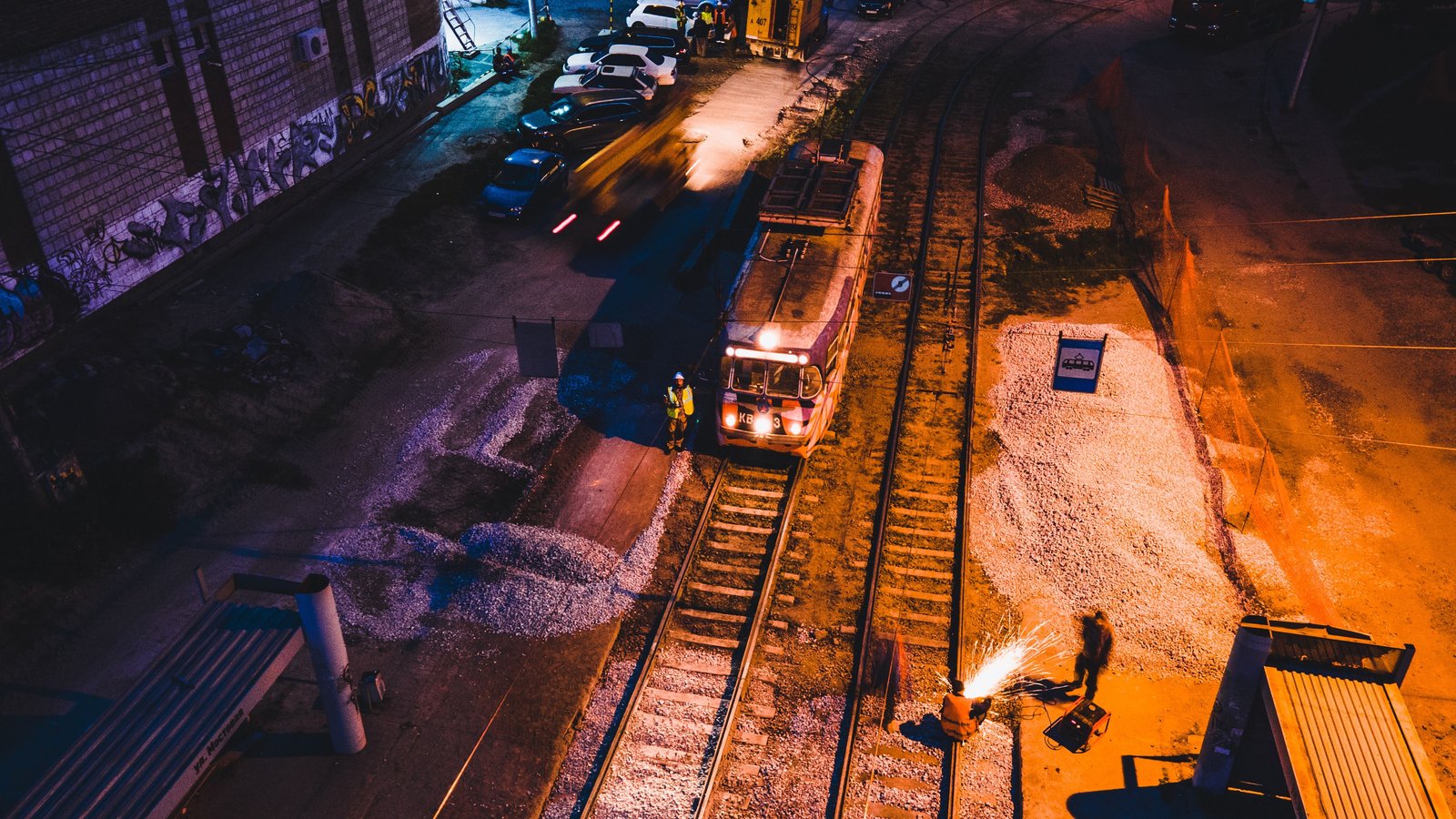
The aluminothermic welding process on site
The actual welding process follows a precise sequence. The ends of the rails are cut square, leaving a typical gap of about 25 mm. They are cleaned and aligned with a 1 m straight edge, leaving a slight ridge to compensate for shrinkage during cooling. A prefabricated refractory mold, sealed with sand, is mounted around the joint. The ends are then preheated to approximately 1,000°C (a few minutes with oxygen and LPG). At this point, the crucible portion is ignited: after about 20-25 seconds, the reaction is complete, and a tapping device pours the molten steel into the mold, which fills the gap between the two rails.
From casting to finished rail
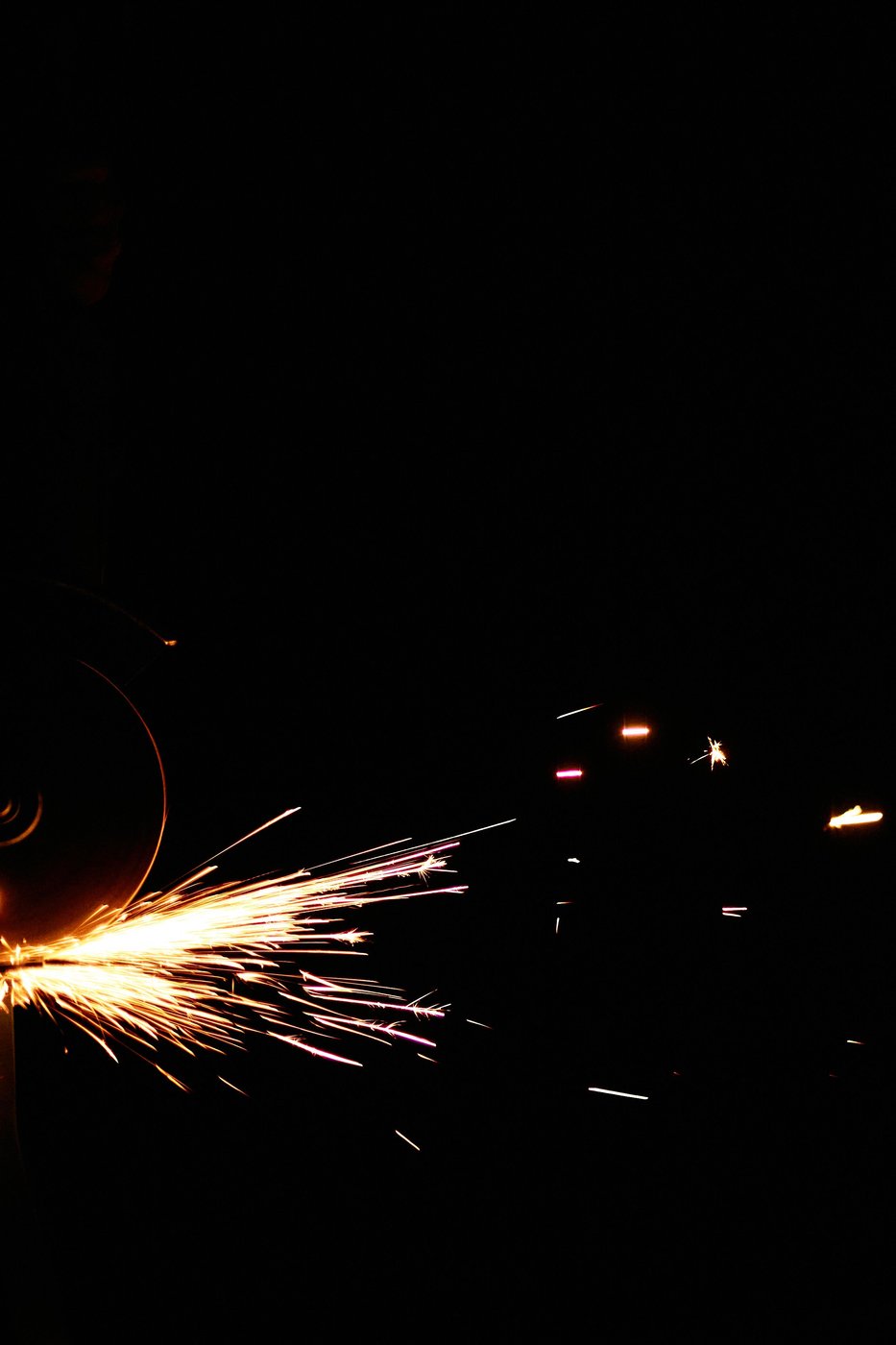
After casting, the steel solidifies in the mold in a few minutes (approximately 4-12). The mold and sprues are removed, and the excess steel is removed while still hot (with a hydraulic shear in less than two minutes). Then, the finishing grinding is performed to restore the profile of the head to the required continuity. The final tolerances are extremely tight—on the order of ±0.4 mm vertically and fractions of a mm horizontally—because any flatness defect on the rolling surface becomes a cyclical impact with each wheel. The entire operation takes place within a traffic interruption period of approximately 45-60 minutes.
Why it matters
Aluminothermic welding allows for the creation and repair of long rails welded directly on-line, where fixed flash-butt welding is ineffective: insertions, repairs, and joints on switches and other structures. The quality of the joint is regulated at the European level by the EN 14730 standard (Part 1: Approval of procedures; Part 2: Qualification of welders), in addition to UIC and network operator specifications. It is a "jet" fusion weld, very different from pressure welding, and for this reason requires rigorous control of temperature, timing, and geometry.
Sources: Aluminothermic reaction and Goldschmidt process (patent 1898); EN 14730-1:2017 and EN 14730-2 (aluminothermic welding of rails); IRFCA, “Thermit welding of rail joints”; temperature data from technical literature on iron oxide/aluminum reaction. Indicative operating parameters; refer to the network operator's approved procedures.