2026 is the year in which Italian signaling changes skin. With the activation of ERTMS on the Orvieto–Settebagni section, the last segment of the Rome–Florence express line still awaiting upgrade, one of the country's busiest lines is switching entirely to the new European standard. This is part of a much broader national program that redesigns the way trains "talk" to the infrastructure.
What happened on the Rome-Florence route
The trade Orvieto–Settebagni It was described by RFI as the last section of the Rome–Florence line still lacking the technological upgrade. The activation, scheduled for April 2026, involved a weekend interruption in traffic and a gradual return to normal operations in the following days. The work on this section is worth approximately 147 million euros, partly financed through the PNRR.
According to the infrastructure manager, the transition to the new system ensures greater reliability and regularity of service, with lower management and maintenance costs compared to traditional signaling technologies.

ERTMS and ETCS: why it's not "just" signalling
THE'’ERTMS (European Rail Traffic Management System) is the European standard designed to overcome the fragmentation of national systems and make trains interoperable between different networks. Its train control component is the’ETCS (European Train Control System): in the most advanced levels, continuous supervision of speed and spacing no longer depends on lateral signals, but on the exchange of data between the on-board computer and the radio block control unit.
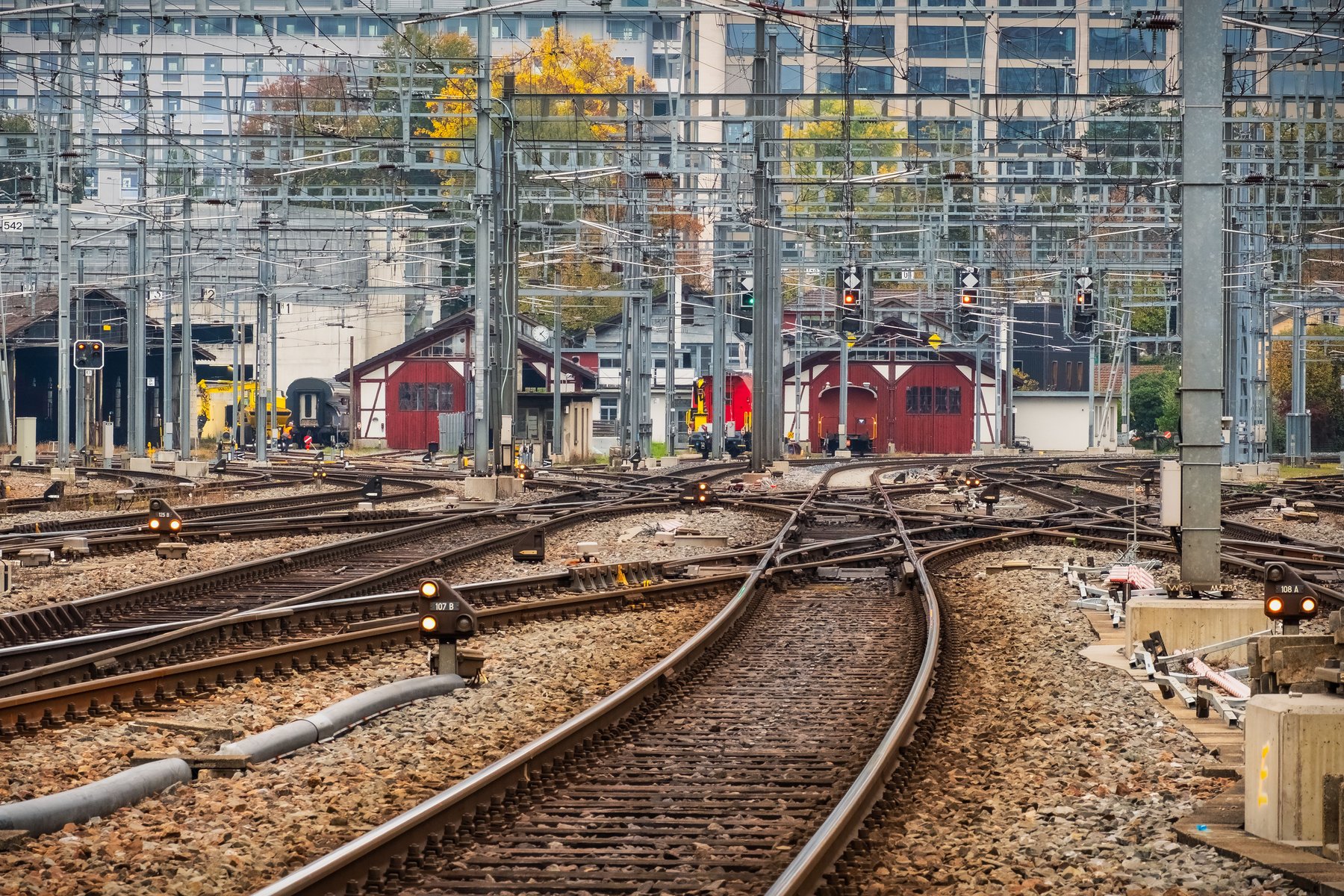
This entails a profound change: the infrastructure becomes a system in which electronics, telecommunications, and equipment must be perfectly coordinated. The position of the buoys, the geometry of the track, the documentation of connections and interference are not incidental details: they are data that the control system assumes to be accurate.
The national picture
The Rome–Florence line is part of a nationwide plan. The ERTMS adoption program in Italy involves approximately 2,800 km of network, with support from the PNRR in the order of 2.5 billion euros and a completion milestone set for June 2026. On the rolling stock front, the FS Group has announced the goal of equipping all trains with on-board ETCS over 20,000 trains by 2030.
Orvieto–Settebagni: ~147 million euros (partly from the PNRR). National Plan: ~2,800 km of network, ~2.5 billion euros from the PNRR, expected completion in June 2026, over 20,000 trains with on-board ETCS by 2030.
Because it concerns us closely
An infrastructure that relies on data to manage social distancing raises the bar on the quality of what lies "underneath": track, geometry, connections, and documentation. Every change to the route, every connection to the national network, every upgrade must be designed and verified in line with signaling developments and with the requirements of RFI and ANSFISA.
This is the ground we work on every day: accurate planimetric and altimetric surveys, analysis and management of the connection infrastructure, modification projects, and regulatory support. In an ERTMS scenario, traceable surveys and organized documentation are not a formal requirement, but the foundation upon which operational safety rests.
In summary
The completion of the Rome–Florence line isn't an isolated achievement, but rather a sign that the entire network is moving toward a data-driven model. For those who design and verify the track system, it means one simple thing: the accuracy of the initial data becomes an integral part of safety.
Sources: Railway Gazette / RailTech — «ERTMS set to go live on final Rome–Florence high-speed section in April» (March 2026); RFI / FS Group, communications on the ERTMS and PNRR programmes; European Commission — Mobility and Transport, ERTMS Italy.