At 29.2 kilometers entirely over the sea, the Hangzhou Bay Transmarine Rail Bridge is the longest high-speed rail project of its kind ever built. It is part of the Tongsu–Jiayong line in the Yangtze River Delta and is designed for an operating speed of 350 km/h. The first main tower was completed on January 16, 2026; it is scheduled to open to traffic in 2027.
A crossing in three navigable spans
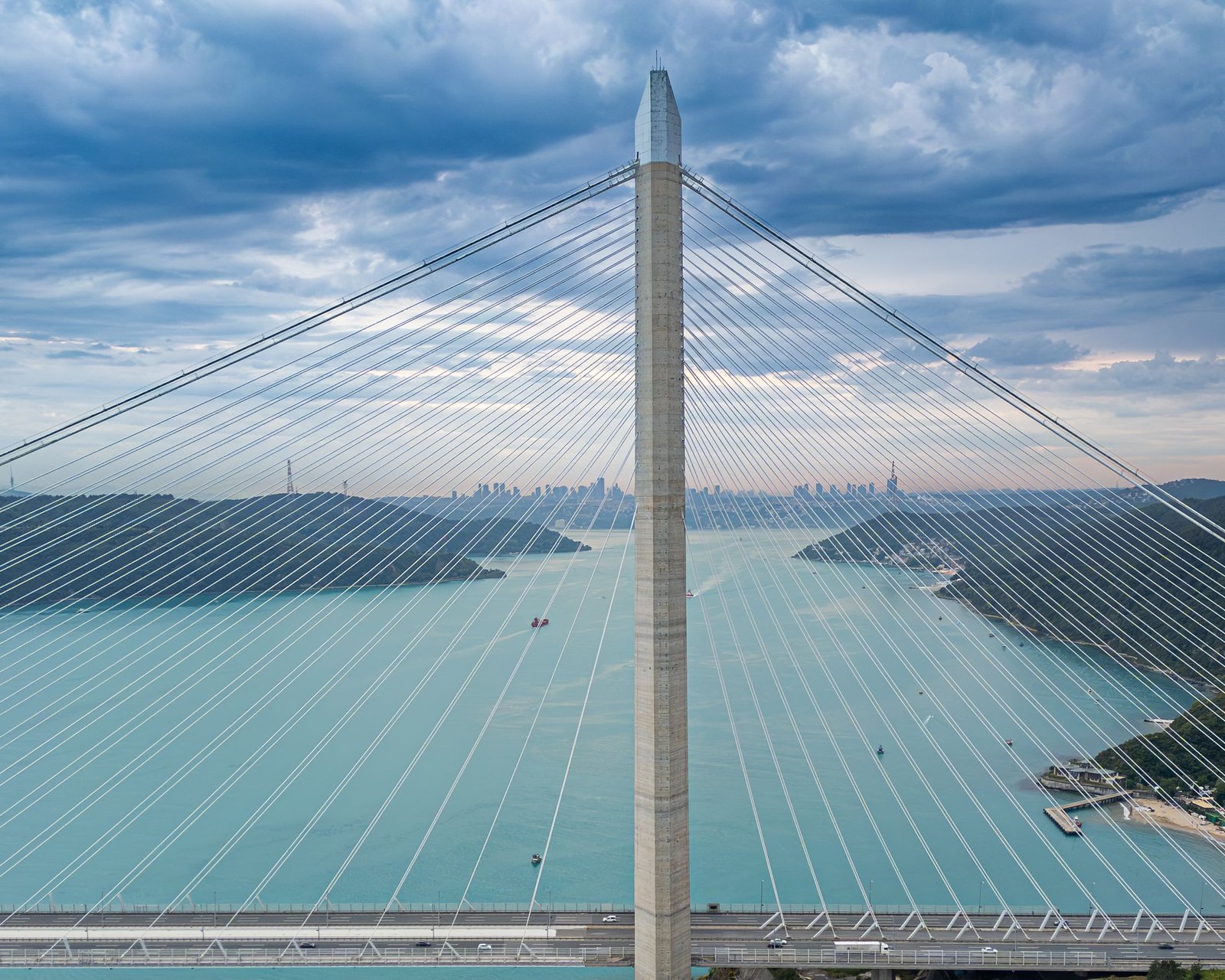
The bridge is not a single structure, but a continuous succession of structures spanning embankments, stretches of open sea, and shallow waters. The route crosses three navigable canals, each with a cable-stayed bridge sized to accommodate the navigation requirements below, connected by long approach viaducts. The northern canal is served by a cable-stayed bridge with a main span of 450 meters: the longest span ever built in the world for a cable-stayed railway bridge with slatted superstructure. The central canal, on the other hand, adopts a three-tower design, with two 448-meter spans, among the longest three-pylon configurations used in rail transport.
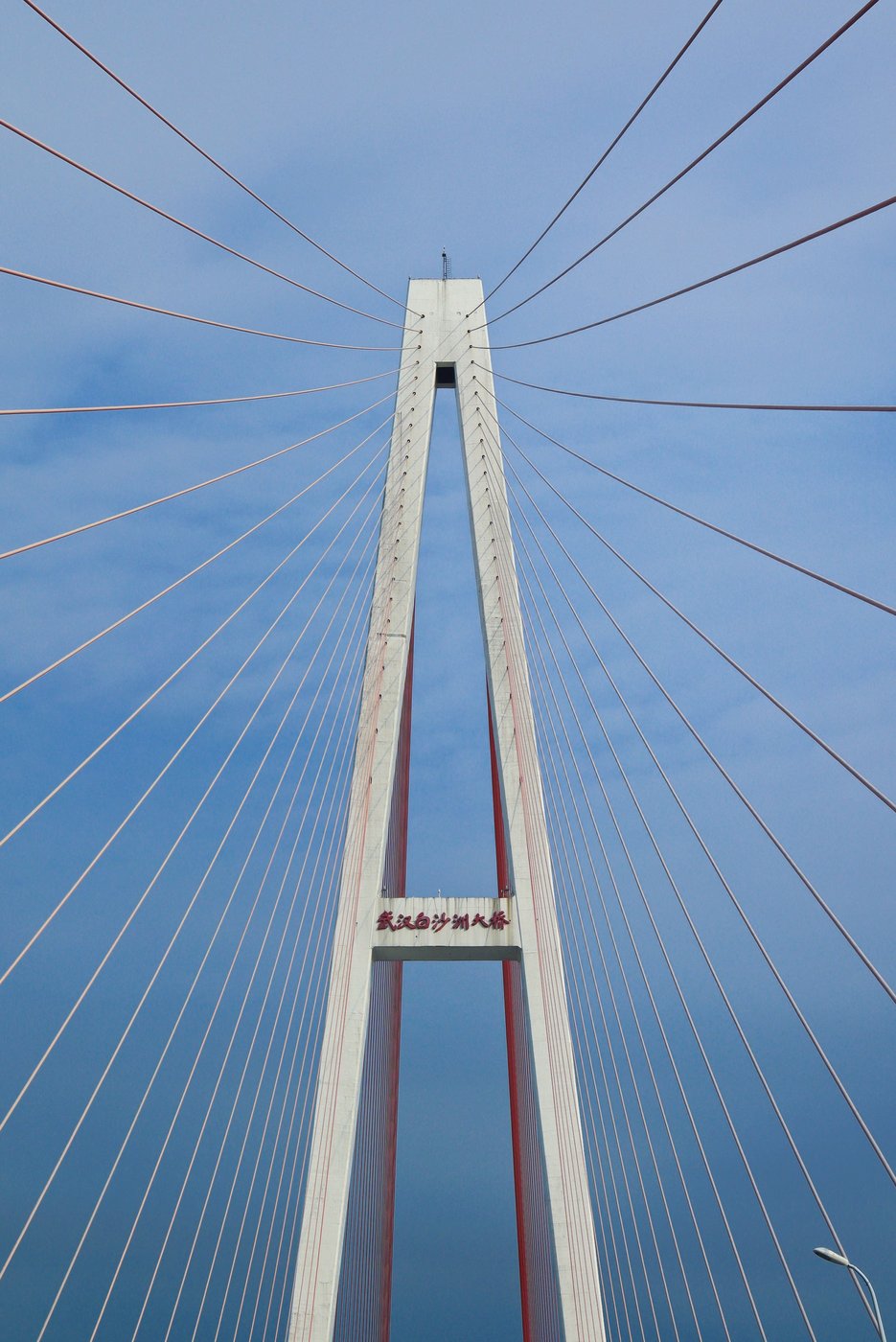
29.2 km long sea bridge, 450 m cable-stayed main span and 2×448 m three-tower layout, for a design speed of 350 km/h.
Armament on slab above the sea
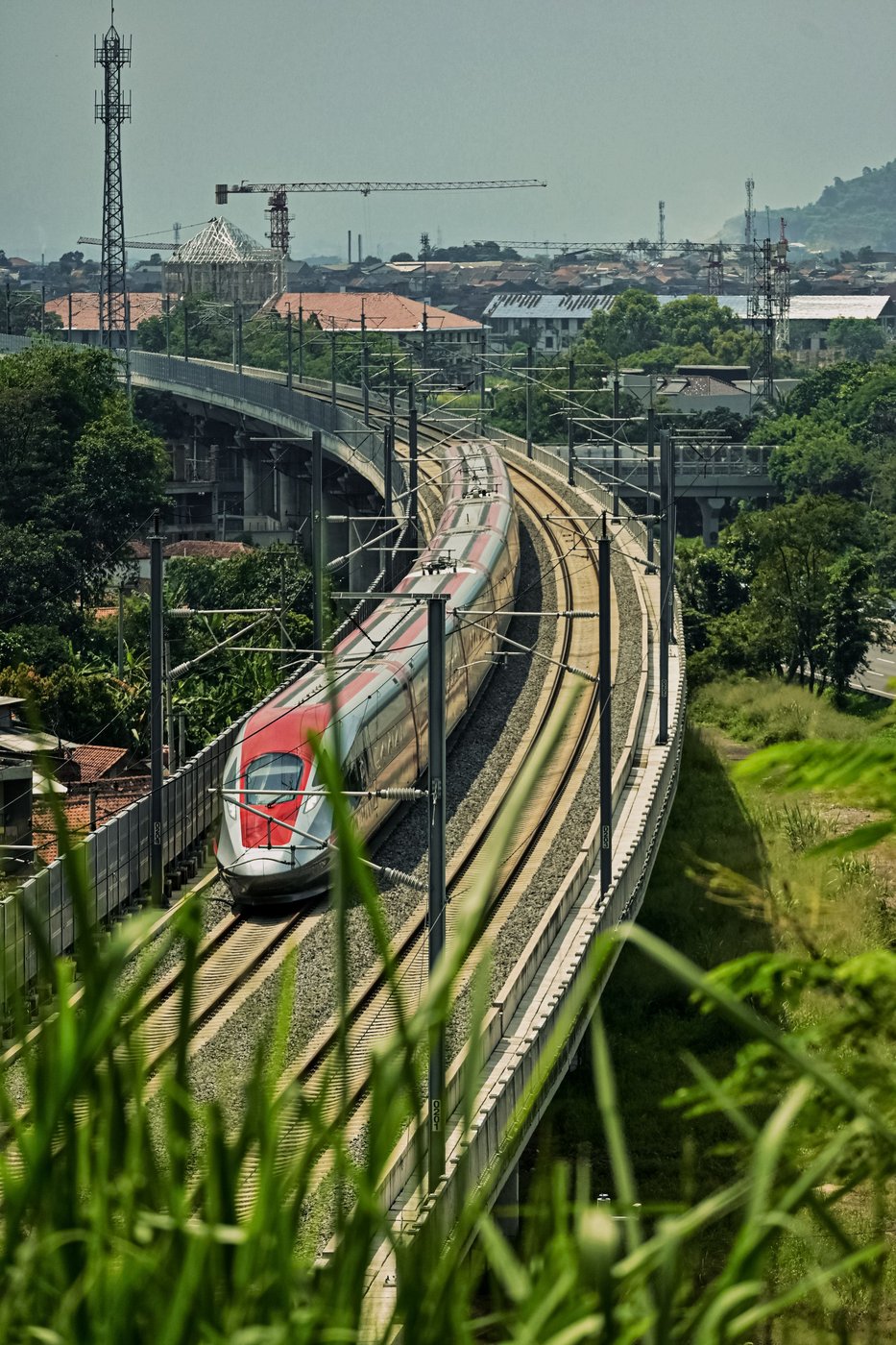
The choice of ballastless track for a transmarine project of this length is the most delicate engineering aspect. At 350 km/h, the geometric tolerances of the track are extremely tight, but the superstructure is subject to thermal expansion, deformations under load, and displacements induced by wind and currents. Maintaining the continuity and regularity of the track on long-span cable-stayed structures, which by nature are more flexible than a girder viaduct, requires strict control of deflections and deviations, both during assembly and in operation.
Building in a hostile marine environment
Hangzhou Bay is known for its exceptionally wide tides and strong currents, conditions that make any offshore operation complex: deep foundations, pier launching, and deck installation. Materials and protection must withstand saltwater aggression for the entire life of the structure, and work windows are dictated by sea conditions. Construction, which began on March 10, 2023, is proceeding in segments and spans, with completion of the towers as a critical milestone before installing the stay cables and decks.
What changes for the Yangtze River Delta
The bridge is the central piece of a new high-speed link designed to more closely integrate the cities of the delta, one of China's most economically dense areas. By reducing travel times between the two sides of the bay, the infrastructure shifts traffic currently reliant on long overland detours to rail, with capacity benefits across the entire regional network.
Sources: CGTN (January 16, 2026); China Daily Zhejiang (April 27, 2025); China Railway Construction (CRECG). Data verified with sources as of writing; construction figures are subject to change as work progresses.