Sri Lanka Railways: Past, Present, and Future
Sri Lanka Railways (SLR), the lifeline of the country's transportation network, boasts a rich history closely tied to the nation's economic and social evolution. Established in 1864 to facilitate the transportation of coffee and later tea from the mountainous regions, the railway system has expanded to connect the island's diverse regions. This analysis provides a technical overview of SLR, tracing its historical development, analyzing the network and current operations, and discussing challenges and ongoing modernization efforts. Technical aspects related to infrastructure, rolling stock, and signaling systems will be examined, highlighting the need for strategic planning and technological advancements to ensure sustainable growth and efficiency.
Historical Development
- Origins: The railway was introduced by the British in 1864 to transport coffee from Kandy to Colombo.
- Expansion: With the growth of tea plantations in the 1880s, the railway network extended into the mountainous areas of Kandyan.
- Growth in the 20th century: During the 20th century, railway lines were built to serve coconut and rubber plantations in coastal and inland areas.
- Major Milestones:
- 1867: Extension of the Main Line to Kandy.
- 1924: Completion of the railway line up to Badulla, considered an extraordinary engineering feat.
- 1928: Completion of the Trincomalee and Batticaloa light railways.
Current Network and Operational Analysis
SLR operates on a broad gauge of 1,676 mm (5 ft 6 in) with a network of approximately 1,460.91 km. The network is composed of several main lines, each with unique characteristics:
- Main Line (Colombo – Badulla): known for its suggestive scenery and engineering masterpieces such as the Demodara Loop and the Nine Arches Bridge.
- Coastal Line (Colombo – Beliatta): runs along tropical beaches and seaside resorts.
- Northern Line (Polgahawela – Kankesanthurai): connects the main cultural centers.
- Kelani Valley Line (Maradana – Avissawella): mainly serves local commuters.
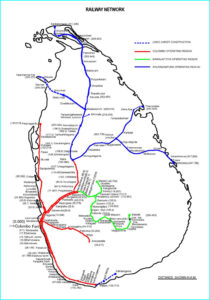
Table of main train connections:
| Line | Main destinations | Key Features |
|---|---|---|
| Main Line | Colombo – Kandy – Nanu Oya – Badulla | Mountain landscapes, tea plantations, Demodara Loop, Nine Arches Bridge |
| Coastal Line | Colombo – Galle – Matara – Beliatta | View of the coast, seaside resorts |
| Northern Line | Polgahawela – Anuradhapura – Jaffna – KKS | Connections between cultural and historical sites |
| Kelani Valley Line | Maradana – Avissawella | Connection with the suburbs of Colombo |
| Puttalam Line | Ragama – Negombo – Chilaw – Puttalam | Connection with Northwest Sri Lanka |
| Batticaloa and Trincomalee Lines | Connection with Eastern Sri Lanka | Trincomalee Port and Batticaloa |
Performance and Operational Issues
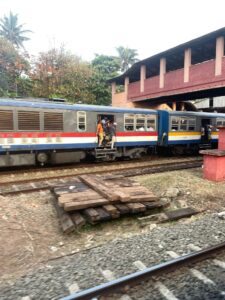
- Speed and Efficiency: Speeds vary depending on the line, with some sections allowing speeds of up to 120 km/h. However, overall efficiency is compromised by aging infrastructure and outdated operating practices.
- Maintenance Issues: Rolling stock and tracks are aged, causing frequent delays and cancellations.
- Staff Shortage: The shortage of train drivers and operators contributes to service disruptions.
- Financial Losses: SLR has been operating at a loss for many years, struggling to cover operating costs, including employee salaries.
Signaling Systems
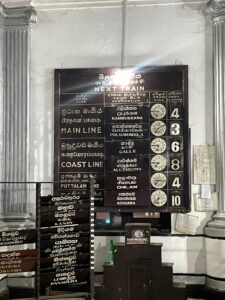
- Lock-and-Block System: Still widely used on the traditional rail network.
- Electronic Reporting: The busiest sectors around Colombo have been upgraded with an electronic system and a control panel Centralized Traffic Control (CTC) located in Maradana.
Rolling stock
- Diesel Locomotives: Most locomotives are diesel powered.
- Passenger carriages: Most of the passenger cars are produced by Astra Rail Industries (Romania) e ICF (India).
Modernization and Improvement Projects
- SmartRail System: A project to modernize railway operations through IT solutions and improve user interaction.
- Railway Efficiency Improvement Project: An initiative supported by the Asian Development Bank to modernize the railway network.
Specific Modernization Efforts:
- Improving the railway network: Track upgrade to handle speeds up to 100 km/h.
- Electrification: Projects to electrify Colombo's suburban rail system, improving energy efficiency and sustainability.
- New Rolling Stock: Purchase of new Diesel Multiple Units (DMU) to improve the quality of service.
Challenges and Recommendations
- Investments in Infrastructure: Significant investments are needed to improve the rail network and purchase new rolling stock.
- Double Track: Expanding double track on key routes could improve capacity and efficiency.
- Public-Private Partnership (PPP): The adoption of PPPs could attract capital and expertise.
- Strategic Planning: Implementing effective management is crucial to reducing operating losses and maximizing revenue.
Sri Lanka Railways, with its long history and extensive rail network, remains a key pillar of the country's transport infrastructure. Addressing current challenges through modernization, strategic planning, and technological advancements is crucial to ensuring a sustainable and efficient future. By focusing on infrastructure improvements, efficient operations, and customer-focused services, SLR can consolidate its role as a vital transport provider in South Asia.